Home Additions in NH: A Guide to Upgrading Septic System for Home Addition Projects
Planning a home addition in New Hampshire requires careful navigation of local building and environmental regulations. When expanding a home's footprint or increasing its living space, property owners must consider the wastewater infrastructure buried in the yard. The capacity of a residential septic system dictates what can legally be built on the property.
Navigating the process of upgrading septic system for home addition projects is a mandatory first step for many homeowners in Southern New Hampshire. Local municipalities will not issue building permits if the proposed construction exceeds the capacity of the current wastewater treatment setup.
This guide clarifies the state rules surrounding remodeling, bedroom counts, and wastewater capacity. Understanding these requirements early in the planning phase ensures your architectural plans align with state environmental laws.
How New Hampshire Regulates Septic Capacity
The New Hampshire Department of Environmental Services (NHDES) Subsurface Bureau regulates residential wastewater systems based on a specific metric. Systems are designed and approved based entirely on the number of bedrooms in a dwelling. They are not sized based on total square footage or the number of bathrooms.
The state uses bedroom count to estimate the anticipated daily water usage for a household. A standard residential septic tank and leach field are engineered to handle a precise daily flow rate associated with that specific occupancy.
If a home was originally built and approved as a three-bedroom house, the underground infrastructure is sized specifically for that occupancy. Converting existing space into a new bedroom or building a new wing fundamentally changes the property's classification. When town building inspectors review plans for an addition, they immediately check the state's septic design approval on file to verify capacity.

What Constitutes a Bedroom During a Remodel?
Confusion frequently arises over what local authorities consider a bedroom. A homeowner might label a new room on the blueprint as a study, a craft room, or a home office. However, building inspectors evaluate the physical features of the space rather than the architectural label.
Generally, if a room offers privacy with a closing door, meets egress requirements with a large window, and includes a closet, the state classifies it as a bedroom. This strict classification prevents future property owners from simply repurposing a home office into a sleeping area and unknowingly overloading the septic system.
If the proposed home addition includes rooms that meet these criteria, the property's official bedroom count increases. This increase is the primary trigger that forces homeowners to evaluate their current wastewater capacity and plan for infrastructure changes.
Upgrading Septic System for Home Addition: When Is It Required?
Understanding exactly when a project requires a capacity change helps homeowners budget effectively. If a remodeling project strictly expands living areas—such as enlarging a kitchen or adding a sunroom—the existing system usually remains legally adequate.
Adding a new bathroom without adding a bedroom is a common scenario. While the state regulates by bedroom count, local town ordinances may have specific rules regarding total plumbing fixtures. A larger tank might be required to handle the sudden influx of water from a large soaking tub, even if the daily average flow remains the same.
The most intensive residential project is the construction of an Accessory Dwelling Unit (ADU) or an in-law suite. Because these units typically add a new bedroom, a bathroom, and a kitchen, they significantly increase the daily hydraulic load on the property. In these instances, upgrading the wastewater system is almost universally mandatory.
The Risks of Overloading an Undersized System
If an addition is completed without addressing the wastewater infrastructure, the system faces immediate and severe stress. A septic tank relies on a principle called retention time. This is the amount of time wastewater sits in the tank, allowing solid waste to settle at the bottom and grease to float to the top.
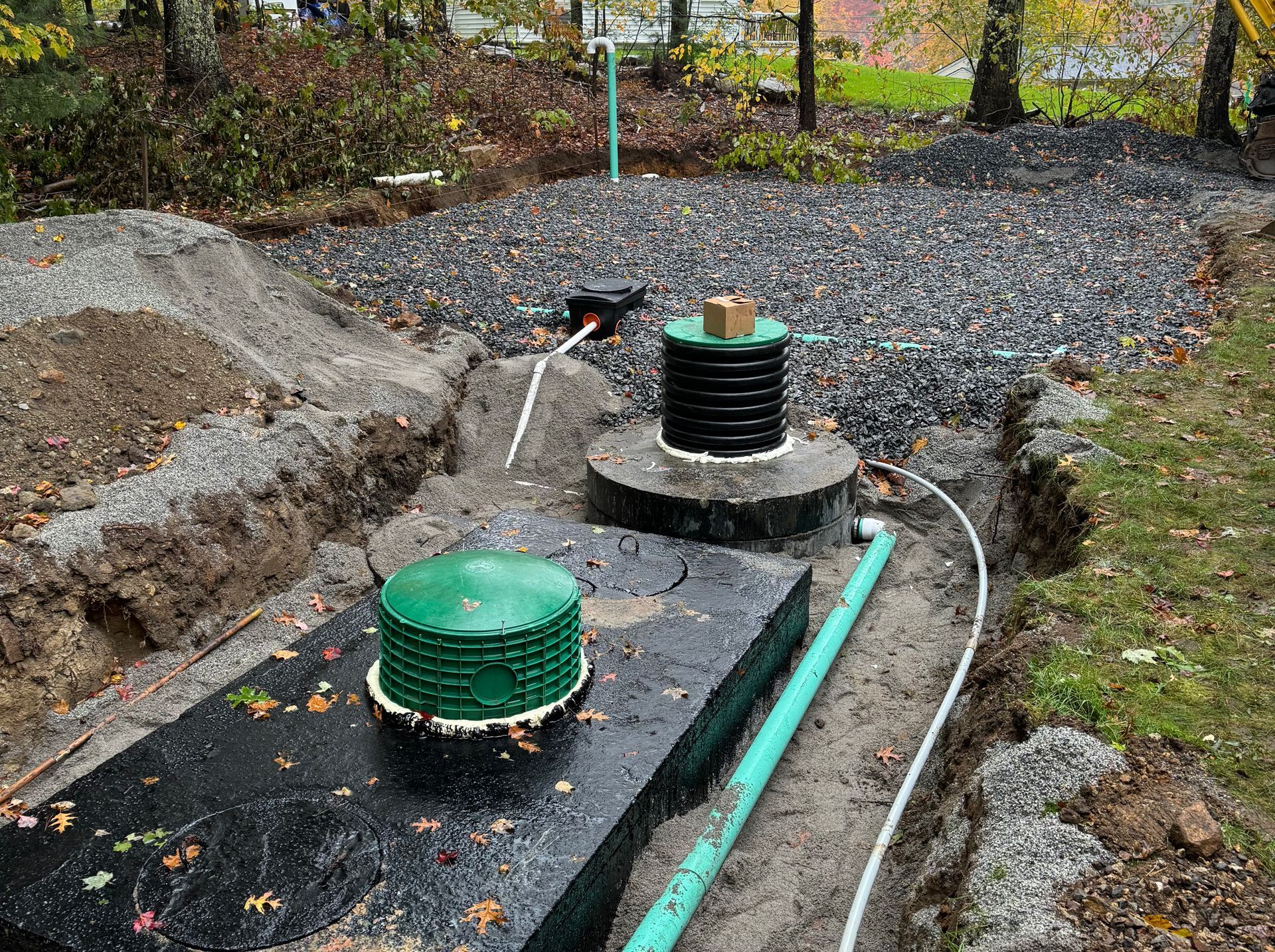
When the daily water volume exceeds the tank's original design capacity, water moves through the system too rapidly. This rapid movement pushes untreated solids out of the tank, past the outlet baffles, and into the distribution box. The distribution box, which is designed to distribute effluent evenly, then pushes these solids directly into the leach field.
Once solids enter the perforated pipes of a traditional stone and pipe leach field, they clog the soil pores. This accelerates the growth of a restrictive bacterial layer known as the biomat. Over time, this hydraulic overload prevents the soil from absorbing treated effluent, guaranteeing premature system failure and messy yard backups.
Steps to Evaluate Your Existing Infrastructure
Before finalizing architectural plans, homeowners must determine the exact capacity of their current setup. The first step involves locating the original septic design plan. The NHDES Subsurface Bureau maintains records for systems installed or modified in recent decades.
The approved design plan reveals the tank size, the dimensions of the leach field, and the legal bedroom count. If the paperwork shows the system was originally over-engineered—for instance, a four-bedroom system installed for a three-bedroom house—the new addition might proceed without a physical upgrade.
The NHDES and local towns require that the homeowner have a test pit dug and septic plans drawn to install a new system if the existing system fails due to increased capacity. A test pit will determine the seasonal high water table and verify that the surrounding soil can handle an increased wastewater load.
What the Physical Upgrade Entails
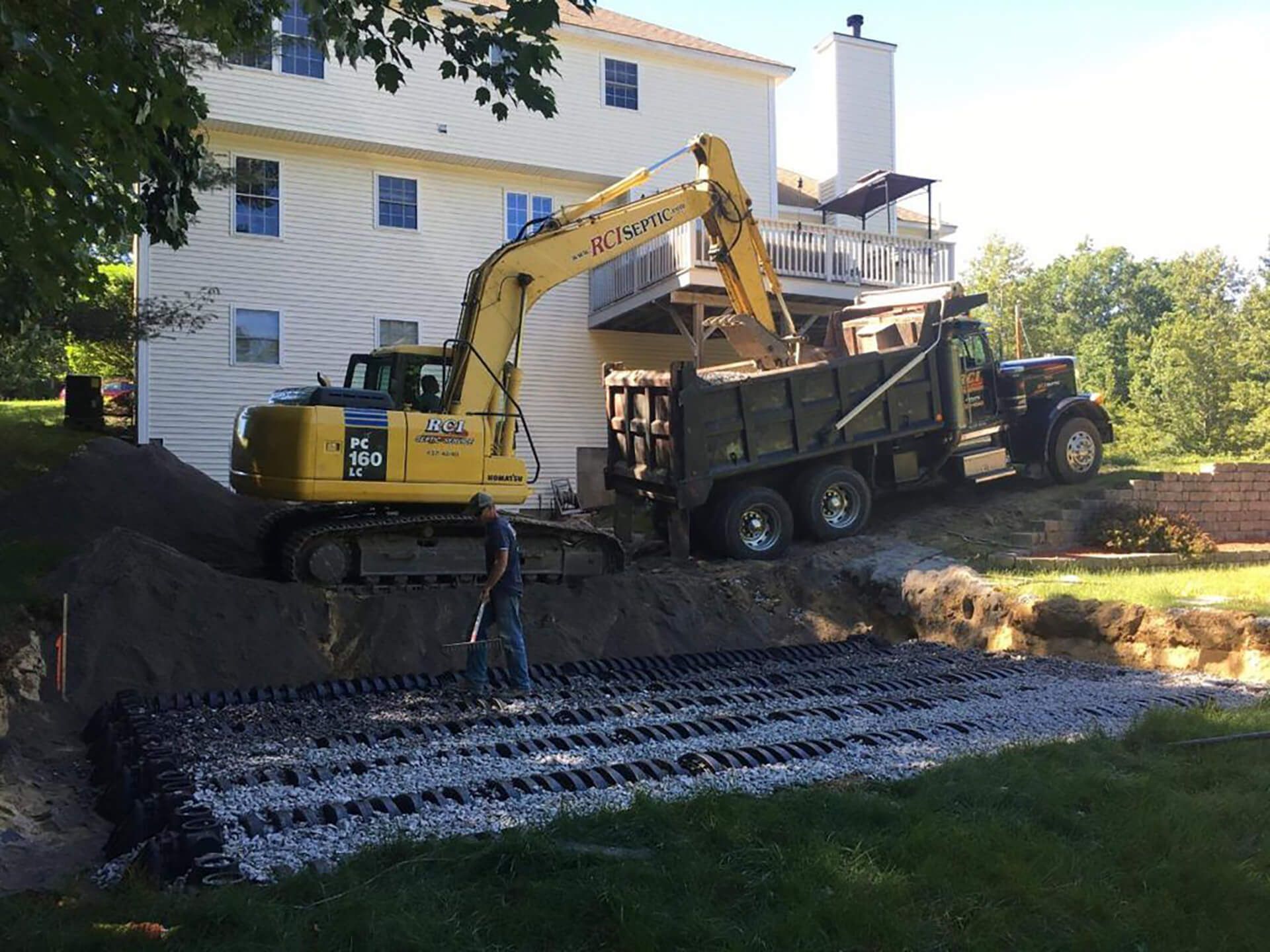
When an expansion or an ADU requires an additional septic tank, NH State aproved plans are required and the NHDES inspects the expansion for a collective-tie-in to the existing septic system.
More commonly, NH State approved septic plans are drawn and kept on file in the event of the existing system failure. At that time, the homeowner will be required to replace the leach field.
Finally, the location of the addition matters. If a new bathroom is being added in a basement below the level of the main septic line, gravity alone cannot move the waste into the tank. The upgrade will require the installation of a septic ejector pump to actively push the wastewater up and out to the main system.

Frequently Asked Questions
Does adding a bathroom require a larger septic tank?
Adding a bathroom does not automatically trigger the state requirement for a larger septic tank, provided the total number of bedrooms in the house remains the same. NHDES regulations dictate system size based on the anticipated occupancy, which is measured primarily by bedroom count.
However, local town building departments may have stricter ordinances regarding total plumbing fixtures. Additionally, if the new bathroom includes high-volume fixtures like a multi-head shower or a large soaking tub, the existing tank may struggle with the sudden surges of water.
A professional assessment can determine if the current tank can handle the increased flow rate. Even if not legally required, upgrading the tank size is sometimes the safest practical choice to prevent hydraulic overload.
How does the state of New Hampshire define a bedroom for septic design?
The state defines a bedroom based on the physical characteristics of the room, not what the homeowner intends to use it for. This prevents homeowners from labeling a room as an office, only for a future buyer to use it as a bedroom and overload the septic system.
A room is typically classified as a bedroom if it offers privacy via a closing door, has a closet for storage, and meets fire safety egress requirements with a properly sized window. If a planned home addition includes these features, it will likely be counted as a bedroom.
Homeowners planning to build dedicated home offices or craft rooms should work closely with their architect. Designing the room without a closet is a common strategy to ensure the space is not legally classified as an additional bedroom.
Can I build a home addition over my existing leach field?
No, you cannot build any permanent structure over an existing leach field or a septic tank. Building an addition over these components compresses the soil, restricts necessary oxygen flow to the bacteria, and physically damages the underground pipes.
Furthermore, the state of New Hampshire requires specific setbacks between the septic system and any building foundations, property lines, and wells. Heavy construction equipment must also remain completely off the leach field during the construction process to prevent soil compaction.
If the only logical place for your home addition is exactly where the current leach field sits, the entire septic system must be relocated to a different part of the yard before construction can begin.
Will an in-law suite require a completely separate septic system?
An in-law suite, or Accessory Dwelling Unit (ADU), usually does not require a completely separate septic system. Most properties tie the new plumbing directly into the main house's existing wastewater lines.
However, because an ADU adds a kitchen, bathroom, and bedroom to the property, it significantly increases the daily wastewater volume. The existing septic tank and leach field will almost certainly need to be expanded to handle this increased capacity legally.
A licensed septic designer will need to draft a new plan that accommodates the combined flow of the primary residence and the ADU. This plan must be approved by the NHDES before the town will issue a permit for the suite.
What happens if I remodel without upgrading my septic capacity?
Remodeling without securing the proper permits and upgrading the septic capacity creates immediate legal and mechanical problems. Mechanically, the undersized system will become hydraulically overloaded, pushing raw sewage into the leach field and causing premature, irreversible failure.
Legally, completing an unpermitted bedroom addition creates massive hurdles when it comes time to sell the property. A real estate septic inspection will quickly reveal that the house has more bedrooms than the septic system is legally approved to handle.
When this discrepancy is discovered, the home sale is often derailed. The homeowner is typically forced to pay for a full septic system replacement out of pocket before the property can legally change hands.
Conclusion
Expanding your living space is a major investment that requires careful coordination between architectural design and utility infrastructure. Attempting to bypass environmental regulations only leads to accelerated system failure and legal complications during future property sales.
By taking the time to understand state regulations and evaluate your current wastewater capacity, you protect the health of your property. Navigating the requirements of upgrading septic system for home addition projects ensures your newly expanded home remains safe, sanitary, and fully compliant for decades to come.
For homeowners looking for additional information or professional support related to this topic, RCI Septic Service offers comprehensive septic-related services and resources. Our family-owned team assists Southern New Hampshire property owners with system evaluations, design planning, and complete installations. Learn more at https://www.rciseptic.com/.