Turkey Grease and Your Septic System: Holiday Kitchen Tips for Septic Homes
The holidays bring big meals, and big meals bring a lot of grease. Most "don't pour grease down the drain" advice is written for homes on town sewer. If your home has a septic system, the reasons are a little different, and so are the stakes for your tank and leach field.
This guide is for homeowners in Londonderry and across Southern New Hampshire who cook on a septic system. It explains what turkey grease does inside a septic system, what to do with it instead, and a few easy kitchen habits that keep your holiday cleanup simple.
Why Grease Is a Problem for Septic Systems
What happens inside the tank
Your septic tank separates wastewater into three layers. Heavy solids sink to the bottom as sludge. Liquid sits in the middle. Grease, oils, and other light materials float to the top and form what's called the scum layer.
Some scum is normal. But a big holiday meal can send far more grease into the tank than usual. The thicker that scum layer gets, the less room the tank has to hold and settle wastewater, and the sooner it needs pumping.
What happens when grease reaches the leach field
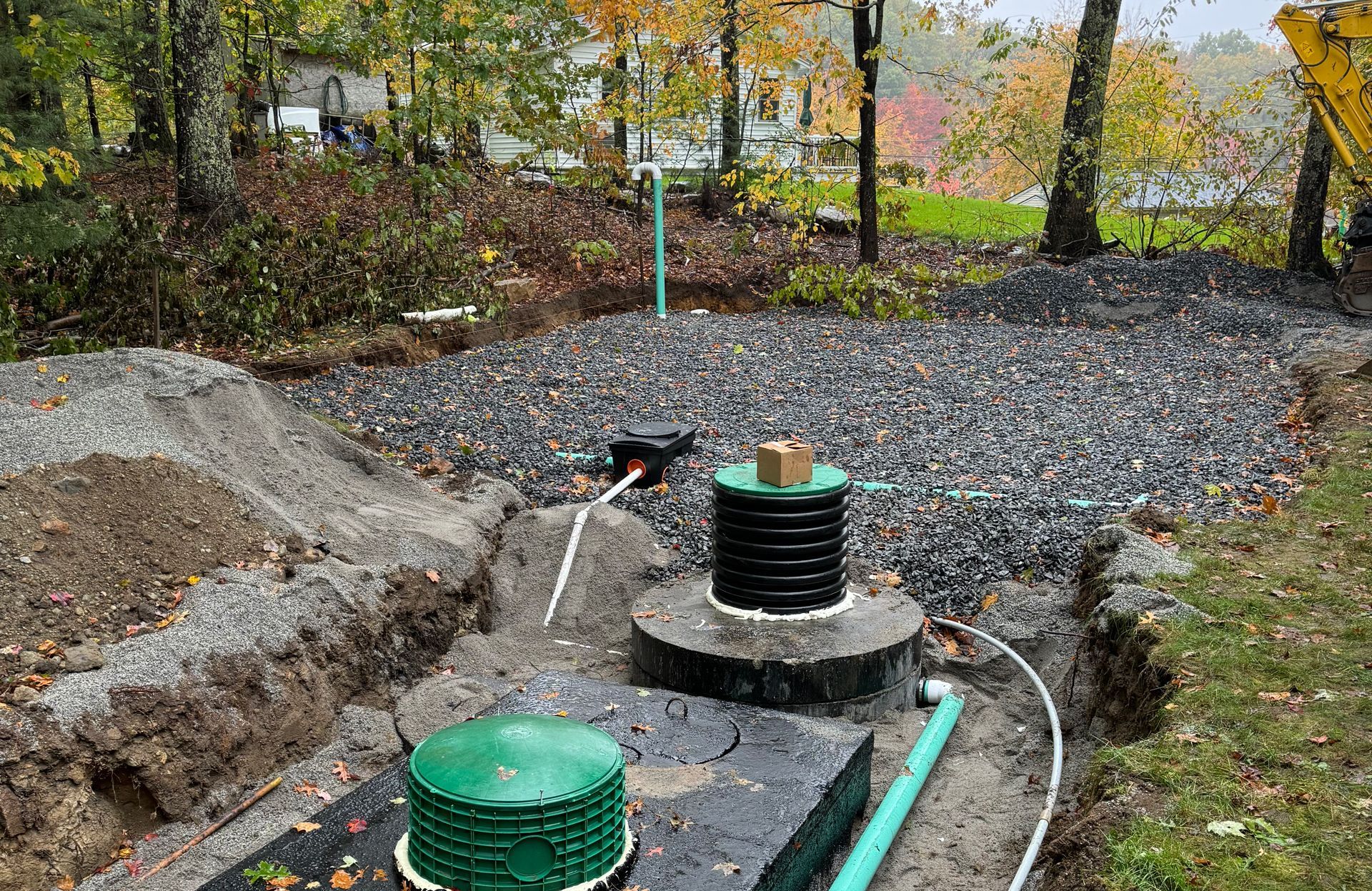
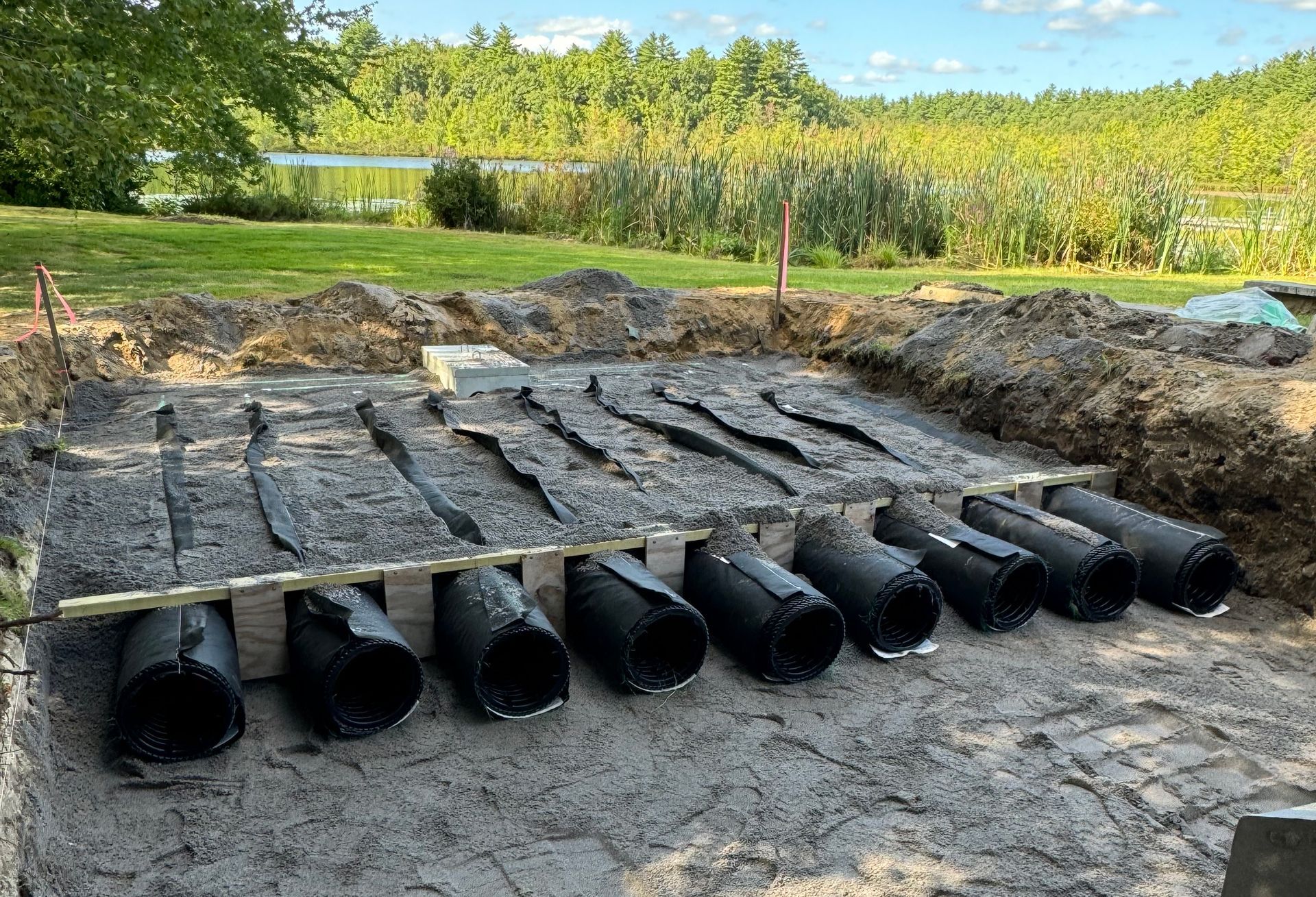
Only the middle layer, the effluent (the liquid that leaves the tank), is supposed to flow out to your leach field. The leach field is the area where that liquid soaks into the soil and gets filtered naturally.
When there's too much grease in the tank, some of it can slip out with the effluent. In the leach field, grease can coat the gravel and soil and slow down how fast liquid soaks in. Over time, that makes the leach field work harder. Since the leach field is the most involved part of a septic system to repair, keeping grease out of it is one of the easiest ways to protect your investment.
Why grease clogs pipes, too
Hot grease pours easily, but it cools quickly once it hits your pipes. As it cools, it thickens and sticks to pipe walls. Food scraps and other debris catch on it and build up. That can slow the drain between your kitchen and the tank, well before the grease ever reaches the tank itself.
What to Do With Turkey Grease Instead
The fix is simple: keep grease out of the sink altogether.
For roasting pan drippings
- Save what you can. Pan drippings make great gravy. Use what you need for cooking first.
- Let the rest cool. Pour leftover grease into a heat-safe container, like an empty can or a jar, and let it cool.
- Toss it in the trash. Once it solidifies, seal the container and throw it away.
- Wipe the pan. Before washing, wipe greasy pans with a paper towel and throw the towel in the trash.
For turkey fryer oil
Deep frying a turkey uses a lot more oil than roasting, so it needs a plan.
- Let it cool completely. Fryer oil can stay hot for hours. Wait until it's fully cool before moving it.
- Strain and reuse it. Strained oil can be stored in a sealed container and used again.
- Seal it for the trash. If you're done with it, pour it back into its original container or another sealable one before throwing it out.
- Check for local recycling. The Northeast Resource Recovery Association encourages its members, including New Hampshire communities, to collect cooking oil for recycling. Ask your town transfer station whether it accepts it.
Don't pour fryer oil on the ground, and never pour it over your septic tank or leach field.
Other Holiday Foods to Keep Out of the Drain
Grease gets the most attention, but it isn't the only holiday leftover that's hard on a septic system. These are better off in the trash or compost:
- Butter, gravy, and cream sauces: They contain fats that behave like grease once they cool.
- Potato peels: They're starchy and can form a thick paste in pipes.
- Rice, pasta, and stuffing: Starches swell with water and add solids to the tank.
- Bones, skin, and fat trimmings: These break down slowly, if at all.
- Coffee grounds: They don't dissolve, and they add to the sludge layer.
- Eggshells: They add solids that settle in the tank.
If you use a garbage disposal, holiday cooking is a good time to give it a break. Our post on using a garbage disposal with a septic system explains why disposals add solids to your tank. For a broader list, see our guide to the household items to keep out of your septic system.
Common Holiday Grease Myths
"Hot water will wash it through"
Hot water only keeps grease liquid for a short time. It cools as it moves through the pipes and into the tank, where it settles and builds up just the same.
"Dish soap breaks it up"
Dish soap can break grease into smaller droplets for a while. Those droplets can come back together as the water cools, so the grease still ends up in your pipes or tank.
"A septic additive will take care of it"
Some products claim to break down grease. They aren't a substitute for keeping grease out of the drain and having your tank pumped on schedule.
Easy Cleanup Habits for the Big Meal

A few small changes make holiday cleanup easier on your system:
- Scrape plates into the trash before they go in the sink or dishwasher.
- Use a sink strainer to catch food scraps while you wash.
- Run full dishwasher loads, and spread them out over the evening and the next day if you can.
- Keep a grease can by the stove so guests helping in the kitchen know where drippings go.
- Spread out water use. A house full of guests means more showers, dishes, and laundry. Our post on hosting the holidays on a septic system covers managing that extra water.
If your tank is due for pumping, scheduling it before or after the holidays keeps your system ready for the busiest weeks of the year.
Frequently Asked Questions
Can I pour turkey grease down the drain if I run hot water with it?
No. Hot water only keeps grease liquid for a short time. It cools in your pipes and tank, where it can stick to pipe walls and add to the scum layer in your septic tank. Let it cool and throw it in the trash instead.
Is it okay to pour grease outside in the yard?
It’s best not to. Grease can attract animals, and it doesn’t break down quickly in soil. Never pour it over your septic tank or leach field. Cool it, seal it in a container, and put it in the trash.
How do I get rid of oil from a turkey fryer?
Let the oil cool completely, which can take several hours. Strain it if you plan to reuse it, or seal it in a container and throw it away. Some New Hampshire towns collect used cooking oil for recycling, so it’s worth asking your transfer station.
Does dish soap make grease safe for a septic system?
Not really. Dish soap breaks grease into smaller droplets for a short time, but those droplets can join back together as the water cools. The grease still ends up in your pipes or septic tank.
What are signs grease is building up in my septic system?
A kitchen sink that drains slowly, gurgling sounds, or odors near the sink can point to grease buildup in the pipes. A septic professional can check the scum layer in your tank during a routine pump-out and let you know if it’s building up faster than normal.
Enjoy the Meal, Skip the Grease
A little planning in the kitchen goes a long way for your septic system. Keep a grease can by the stove, scrape plates into the trash, and give your drains a break from the starchy leftovers. Your tank, your leach field, and your holiday guests will all be better for it.
RCI Septic Service is a family-owned septic company in Londonderry, serving homeowners across Southern New Hampshire. We help with septic pumping, inspections, installation, and repair and replacement. You can learn more at rciseptic.com.